
The Intimacy of Taste (Buds)
On intimacy, appetite, and the art of paying attention.

There is the intimacy of knowing someone’s preferences, and then there is the intimacy of the mouth itself.
When you bite your lover’s neck and a drop of their sweat meets your tongue.
When you kiss their lips and the salt from their sea swim is still there.
When you taste the faint bitterness of their drink before their tongue meets yours.
It is similar to recognising someone’s scent, the familiar comfort of how they smell, but it is even more secret. Any average person can be exposed to another’s scent while passing them on the street or standing beside them in an elevator. But the flavour of a person? That belongs only to those invited close enough. It is a private exchange, a bond shared between the two people involved and no one else.
Our mouths are sacred parts of our bodies. They are where breath enters and exits, where we whisper secrets and confess love. Maybe this is why feeding someone feels so intimate - you are surrendering to another person’s choice and action. Their decision of which exact strawberry you will eat, or which mouthful cut from their plate will give you the perfect balance of flavours they know you enjoy. It is vulnerability and trust. Surrender in its most primal form.
Food chosen by another carries their preference, but not their essence. It isn’t until you ask for a drag of their cigarette or a sip of their wine that a trace of them transfers to you. That faint impression gives you an idea of what a kiss might be like in that exact moment. A sip of their red wine hinting at the real thing. But then there are moments when the hints are abandoned entirely. A person’s mouth filled with water directly from the mouth of their lover is an act of profound intimacy, not hinting at anything but rather directly pouring it into another. It’s drinking a glass of water that carries the taste of the other - the purest nourishment, infused with that lingering flavour.
Outside of these moments of physical closeness, there is another, quieter intimacy: knowing what someone will enjoy before they even taste it. There are very few people that I feel confident in my ability to discern whether they will like something or not. One of these people is my best friend Maeve, who I have lived with for years. But it does extend to others from time to time. I know that one of my friends really seems to like spiced food with cardamom and cinnamon; anything reminiscent of traditional chai spices is almost always right for her. Another friend hates rocket. I think of him whenever I eat a rocket salad and smirk at how much he would dislike it. It is also the intimacy of someone else knowing you just as well. Maeve knows what I will like. She knows when a sweet is too sweet for me. She knows when the chocolate is just dark enough, and she will offer me a bite of whatever it is without hesitation, already knowing the answer.
There are very few people I feel would be able to confidently choose a full meal for me. Maybe this is why the thought feels exceptionally sexy - arriving slightly late to a dinner date and the bottle of red already being opened as I walk in, being told that the bread and olive oil are on their way. Someone has anticipated me. Chosen for me. It is control, care, and trust woven into one small, ordinary act.

We show our love through our taste, through our willingness to try something new. Couples, specifically those of mixed cultures, are able to share their love by introducing new foods and cuisines to their partners, things that may once have felt completely outside the realm of a normal diet. When someone is willing to try this new flavour and experience, and put that trust in another person, it’s almost as if the bond strengthens with every mouthful. It leads to an oddly important question - is grocery shopping with someone the ultimate compatibility test? Do they check all the sale items to make sure they’re getting the best value for money? Do they splurge on the same things? Do they get a sweet treat for themselves (and you) every time they are in the supermarket?
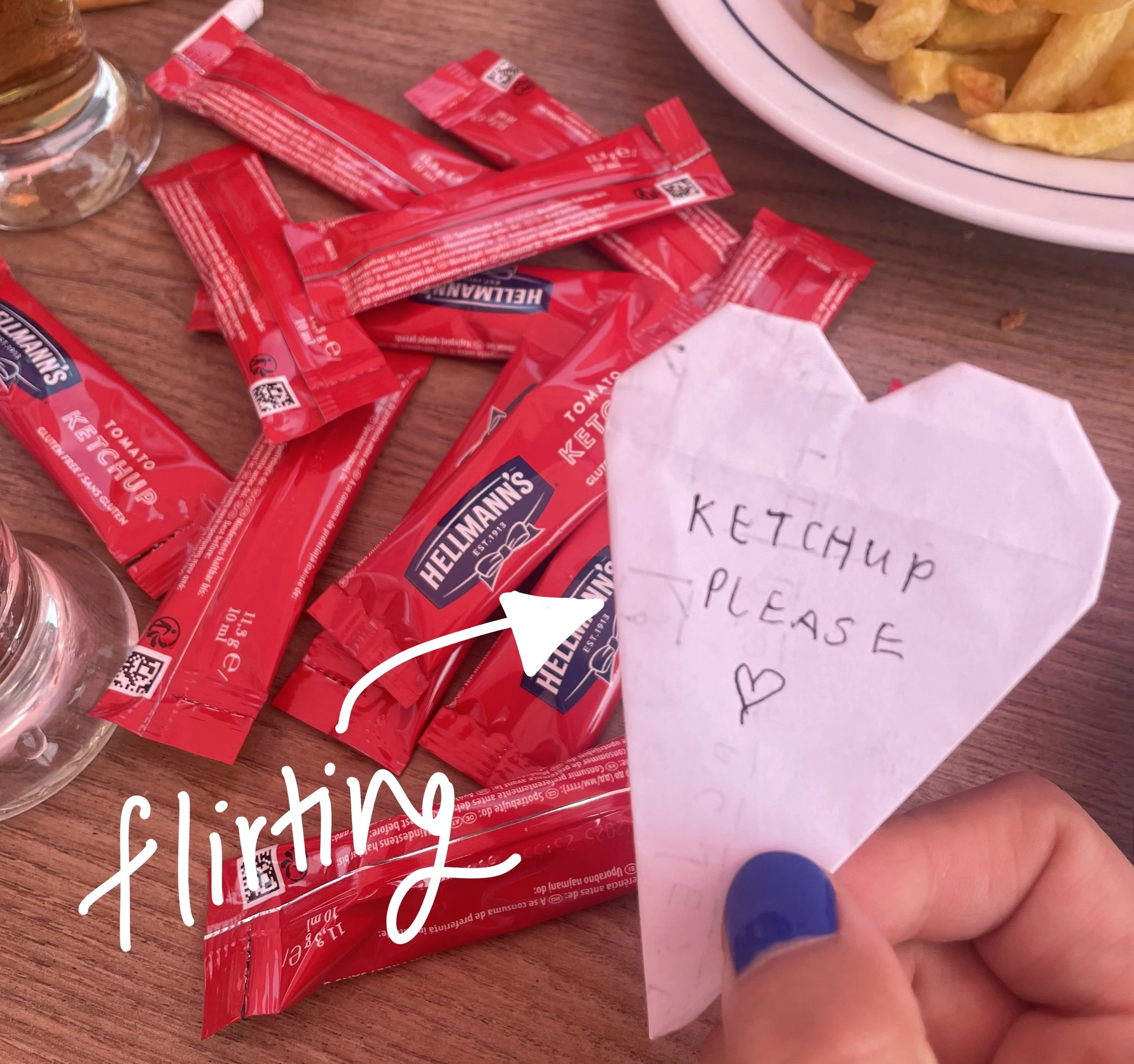
The vessel we choose to consume food from can also change our experience of taste. In certain countries, it is seen as the norm to eat food with your hands. In Hinduism, it is thought that each of your five fingers corresponds to a different element - fire, earth, space, air and water. Using these five fingers to eat is believed to help keep these elements balanced within the body, adding to an overall sense of wellbeing. In cultures that usually use cutlery, there is another type of intimacy offered by the simple fact of a favourite spoon. Maeve and I both have a favourite fork and spoon, and when setting the table we choose these utensils for each other without even thinking. The intimacy of knowing, of anticipating rather than assuming. This act feels nurturing and kind, rather than presumptuous.
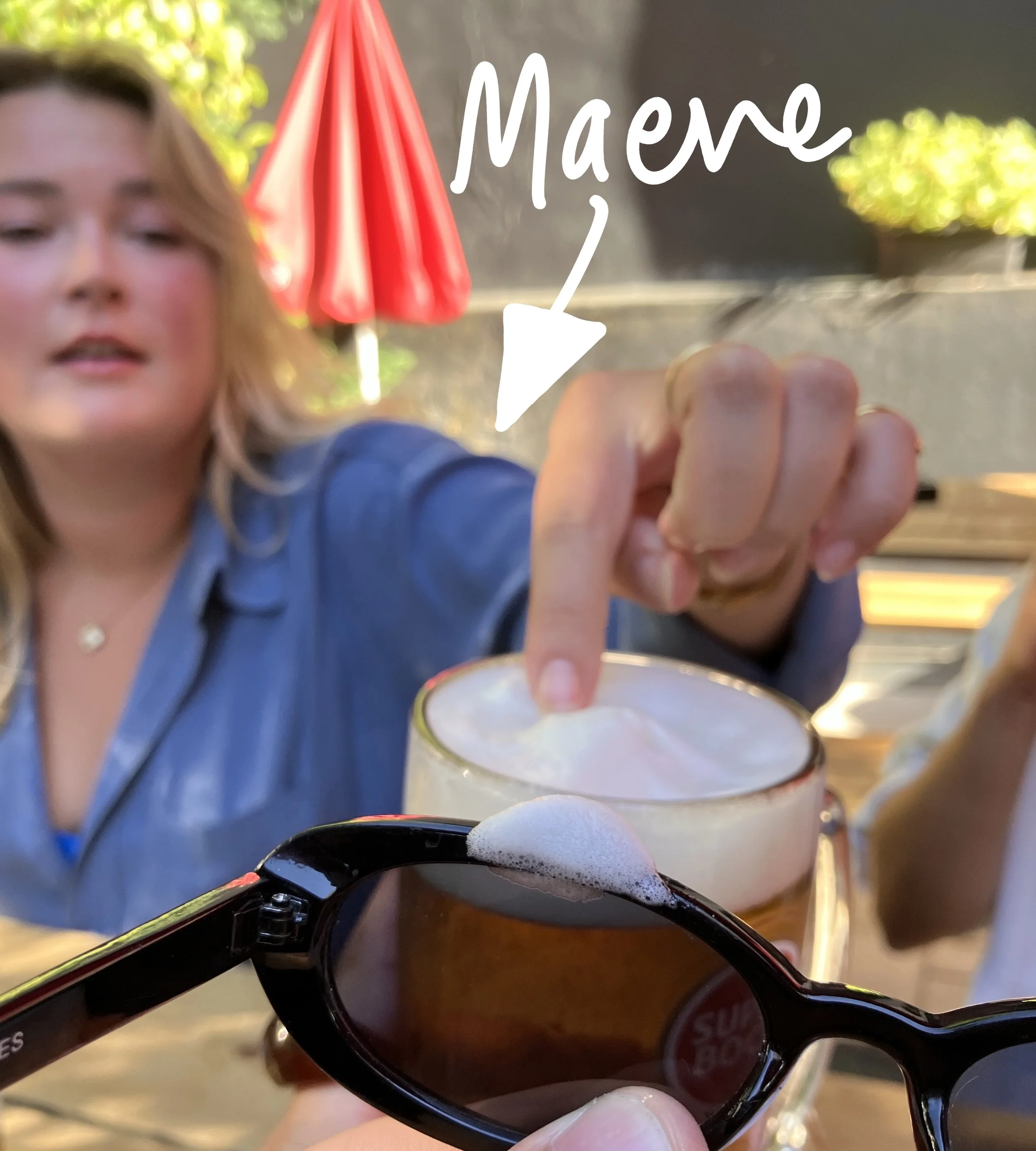
Aversions are just as personal as favourites. There is one food that I truly do not like, and it’s courgette. I promise I have tried to like it but it’s really a no go for me. It can be tricky when someone cooks me a meal with courgette as an ingredient. I would never want to seem ungrateful and not eat some of the meal, but I will quite literally gag if I try to eat it. This is where my best friend comes in handy. Maeve knows. She will sit next to me so I can sneak the courgette onto her plate. We have it well rehearsed. No one even notices.
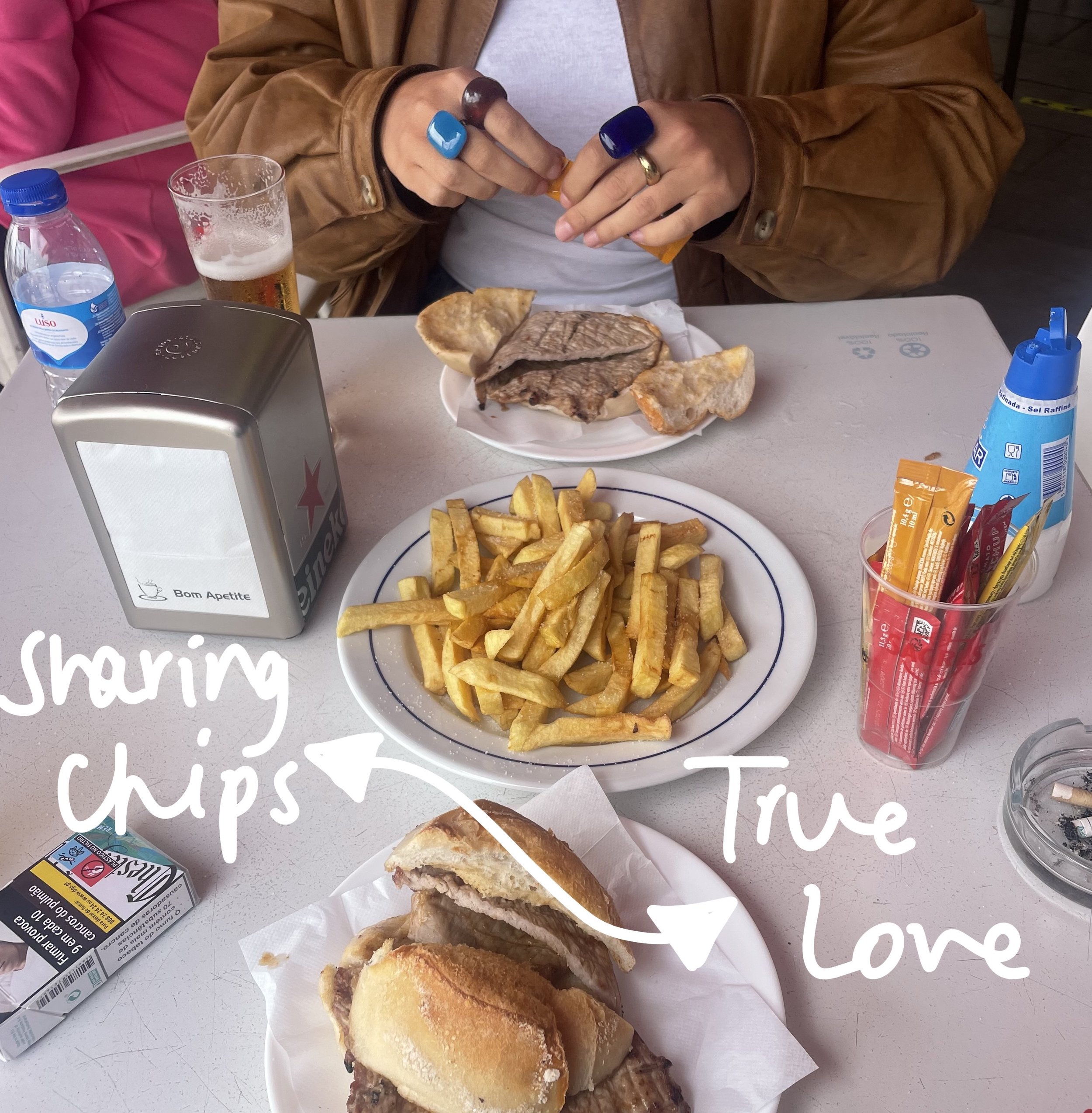
Taste can be a memory of a place, or a person, or a specific time in your life - when your memory proves to be wrong, or the taste of a thing changes, it feels like a deep blow. Going out for a catch up with my ex and incorrectly ordering their drink would be a tiny bit heartbreaking to me. I know they are my ex, I know that we ended our relationship and we’re not meant to be together, but I know them so well and they know me so well - so what do you mean their taste has changed and I didn’t know about it? It is almost like a definitive divide and shift in your lives, one that doesn’t happen instantly when you break up but develops slowly over time, much like one’s taste. Everyone’s tastes change. External factors are generally to blame - a trip to a foreign country, or a fling with someone who loves to cook. Our palates develop alongside our personalities; there have been proven links between people developing a greater tolerance for spice when they become more adventurous in their lives1. So it shouldn’t be such a dagger to the chest when someone from a past life has a slightly different palate. But it is.
Taste is shaped by emotion, but it is also undeniably influenced by another irrational force: hormones. Women illustrate this clearly through menstrual cravings, and even more so during pregnancy. It can feel as though the body is rewiring itself in preparation for a new person to emerge - not only the child, but the mother who will be transformed once their baby enters the world. In the early stages of pregnancy, strong aversions to certain smells and flavours usually arise; many fade after birth, but not always. Shifts in preference begin early and can continue into strange cravings, some intended to nourish the body, others seemingly driven by the restless chemistry of pregnancy brain. All of this, maybe to prepare the mother to pass elements of her own taste to her newborn.
Maybe taste is just another way we try to understand each other. Through menus and grocery aisles, through favourite spoons and shared desserts, through kisses that still taste faintly of beer or saltwater. We learn each other slowly, mouthful by mouthful. Tastes and people change, but the act of noticing will forever be its own form of quiet intimacy.
1
Byrnes NK, Hayes JE. Personality factors predict spicy food liking and intake. Food Qual Prefer. 2013;28(1):213-221. doi:10.1016/j.foodqual.2012.09.008